Supply chain & provenance
Prove Where It's Been, Not Just What the Label Says.
Track custody of high-value goods, from watches and wine to pharmaceuticals and agricultural lots, as a chain of on-chain transfers that's provable at every step.

The context
Recording custody transfers on-chain as they happen makes the sequence itself the evidence, and makes a gap in the sequence visible instead of deniable.
What you get
- Custody transfer enforced in Script
- Each handoff is a Script-enforced transfer rather than an entry someone can backdate.
- Batch metadata and attestations
- Attach lot metadata and inspection attestations at each handoff in the chain.
- Scan-to-verify app
- A consumer-facing verification app is generated from the same spec as the contract.
The handoff
One handoff, as it will actually be recorded.
- Every transfer is inspectable first
- The proposed transaction is shown in full, with inputs, outputs and attached metadata, before anyone signs it.
- Nothing is backdated
- A custody entry exists because a transaction was broadcast. There is no row to edit afterwards, which is the whole basis of the provenance claim.
- Testnet until you mean it
- The same panel drives testnet, so you can rehearse a full lot's journey before a single real handoff is recorded.

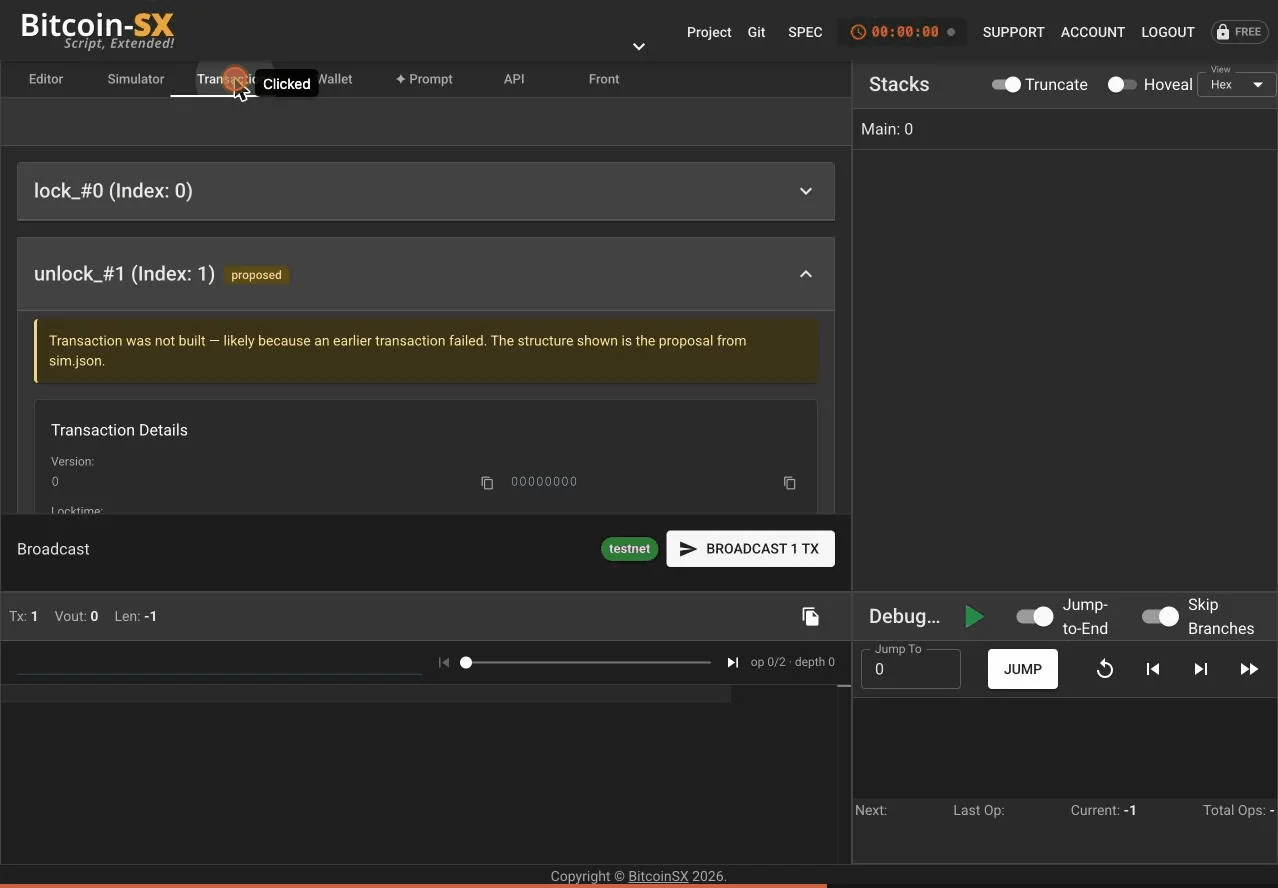
Inside the IDE
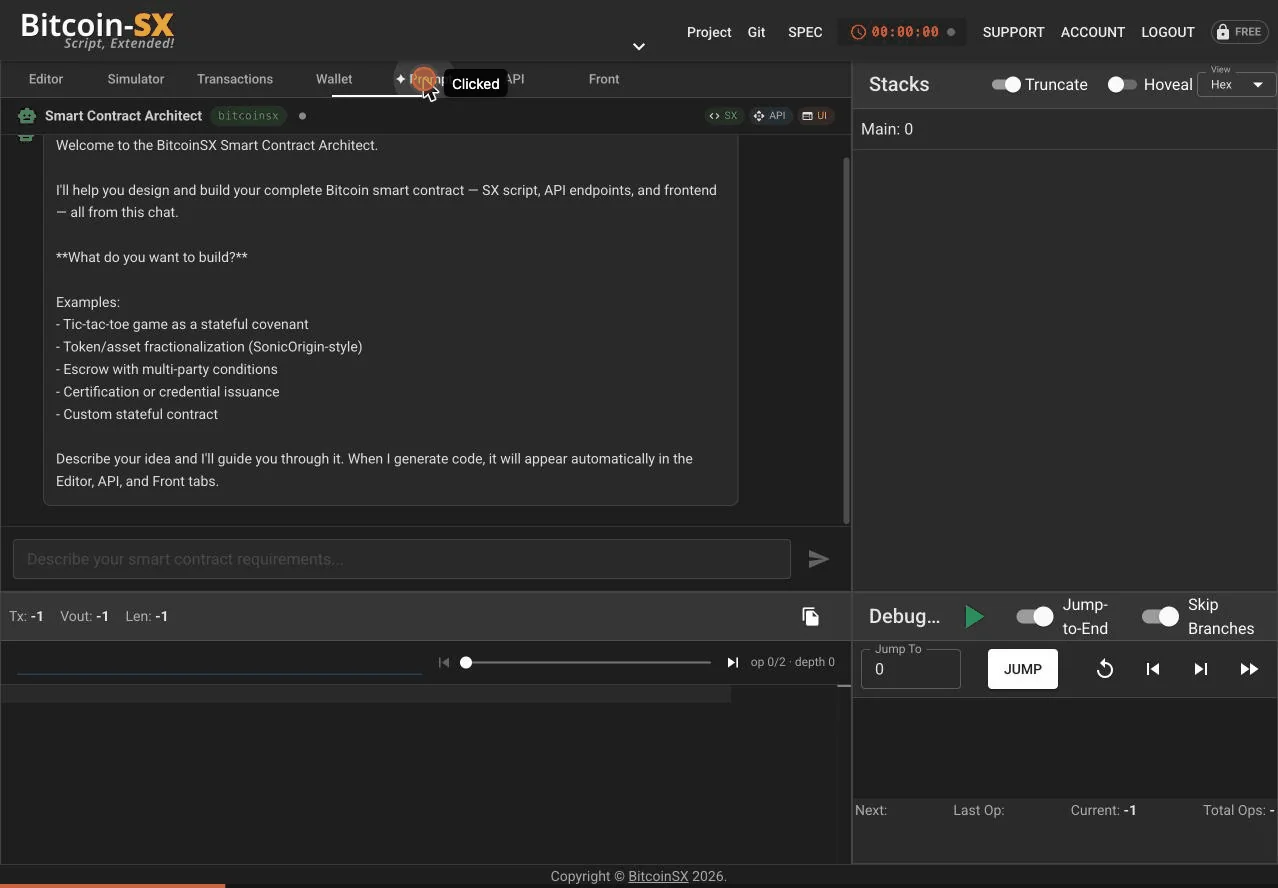
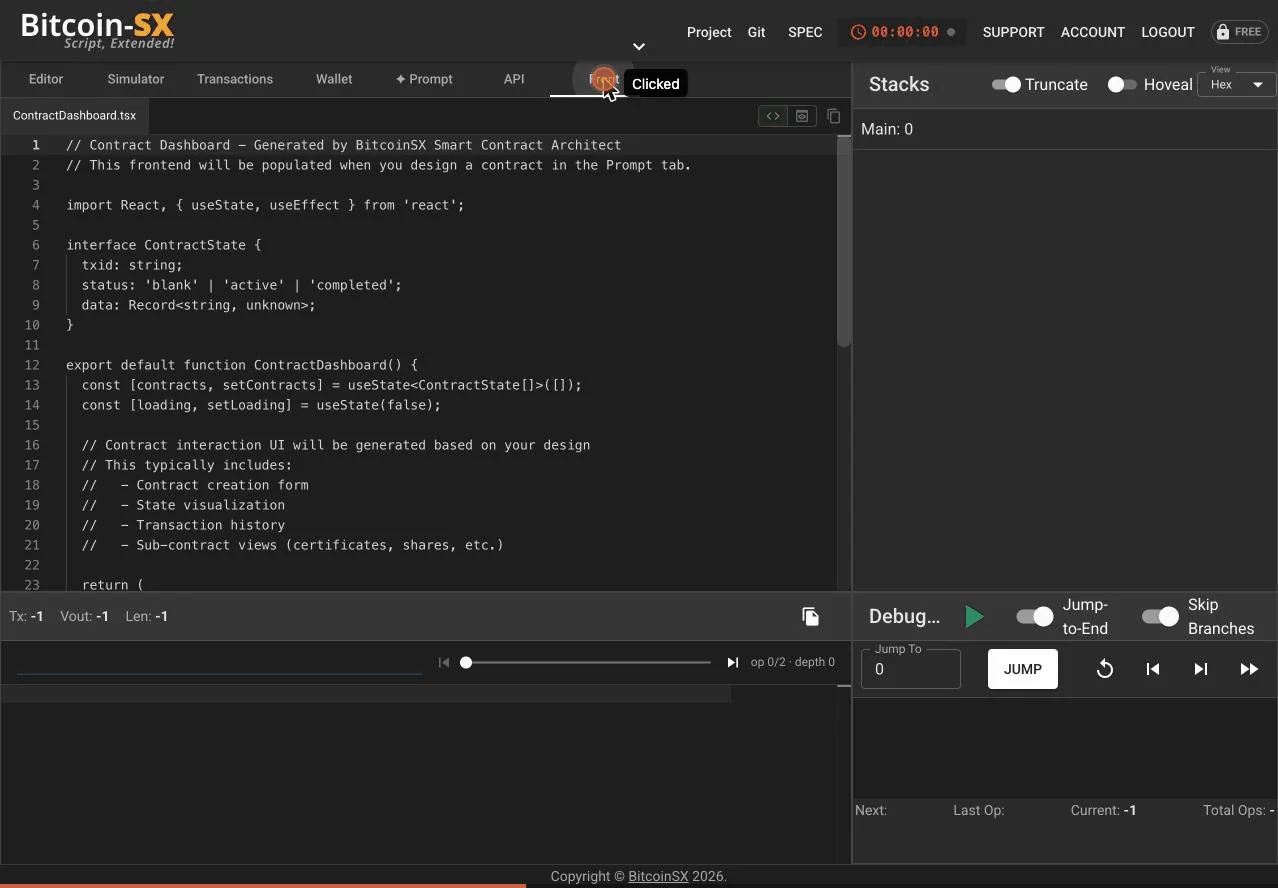 Every handoff, visible
Honest limit
The link between the physical item and its on-chain record (NFC tag, QR code, tamper-evident seal) is a supply-chain process you design. The contract secures the digital record once that binding exists.
Try it now
Run it in the browser before you sign up for anything.
Get the supply chain & provenance starter kit
A prompt pack and worked example for this use case, so you start from something that already runs rather than a blank editor.
This form isn't connected yet.
Set NEXT_PUBLIC_FORM_STARTER_KIT to a Google Form share link and this section starts collecting submissions. No code change needed.
The starter kit content is still being authored per use case. Join and we'll send it the moment yours is ready, rather than mailing you a placeholder.
Frequently asked questions
If something you need to know isn't here, just ask. We'd rather answer directly than leave you guessing.
Nothing in the contract layer. The physical binding, whether NFC, QR or a tamper-evident seal, is the part that makes the digital record mean anything, and it's a process you design. The chain secures the record once that binding exists; it can't vouch for the binding itself.
Prove Where It's Been, Not Just What the Label Says.
Track custody of high-value goods, from watches and wine to pharmaceuticals and agricultural lots, as a chain of on-chain transfers that's provable at every step.
Explore other use cases